Extremozymes: Enzymes for Extreme Research Conditions
<p>Enzymes from extreme environments can work under conditions that challenge conventional biocatalysts. This short guide explains what makes extremozymes different and how researchers outside enzymology can evaluate an extremophile-derived enzyme for demanding reaction conditions.</p>
Enzymes from extreme environments can work under conditions that challenge conventional biocatalysts. This short guide explains what makes extremozymes different and how researchers outside enzymology can evaluate an extremophile-derived enzyme for demanding reaction conditions.
What are extremozymes
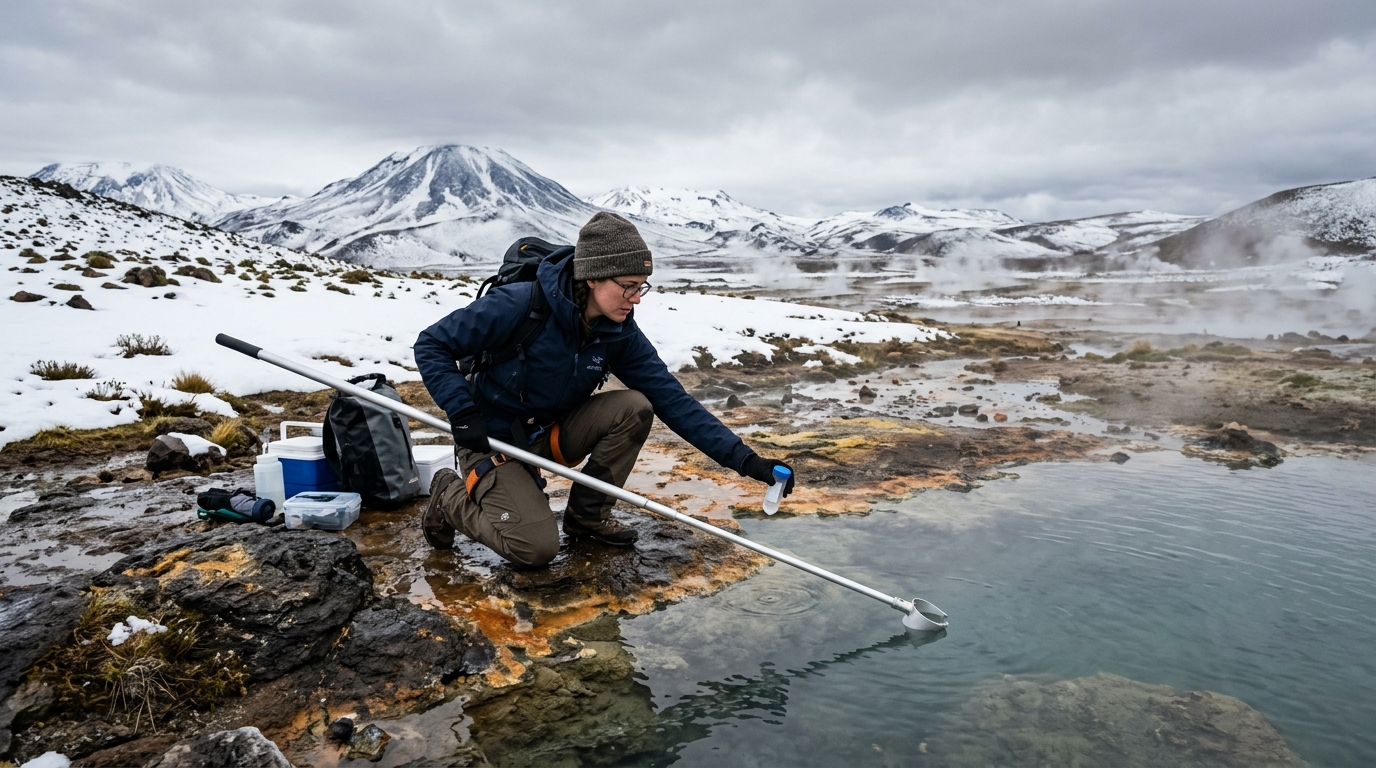
Extremozymes are enzymes produced by microorganisms that thrive where ordinary biology struggles: geothermal systems, polar and glacial environments, hypersaline waters, acidic sites, and alkaline soils (Sarmiento et al., 2015). The term describes the enzyme, not the geography. An extremozyme is not interesting merely because it was isolated from an extreme place. Its value lies in the measurable properties that can result from that biological adaptation, such as activity and stability under a specific temperature, pH, or salinity regime (Sarmiento et al., 2015).
What makes an extremozyme different
Enzyme function depends on the protein remaining folded while its active site keeps working. Long-term exposure to a particular stress can shape the features that support that balance.
- Cold-active enzymes can show increased structural flexibility, which helps maintain high catalytic efficiency at low temperatures (Santiago et al., 2016).
- Thermophilic enzymes can carry additional stabilizing interactions and a more tightly packed structure that preserve the active conformation at elevated temperatures (Sarmiento et al., 2015).
- Halophilic enzymes can rely on an excess of acidic surface residues that help maintain a functional hydration shell in high-ionic-strength media (Santiago et al., 2016).
The key point for a researcher is that extremozymes are not conventional enzymes with a higher tolerance setting. Their properties arise from the relationship between molecular structure, biological adaptation, and reaction conditions, and no single mechanism explains every enzyme family (Sarmiento et al., 2015).
Different environments, different enzyme opportunities
The biological origin of a candidate enzyme suggests a starting hypothesis for enzyme selection:
- Thermostable enzymes fit reactions run at elevated temperature, where heat improves substrate solubility, mass transfer, or reaction rate.
- Cold-active enzymes fit heat-sensitive substrates and low-temperature experiments, where heating would damage the product or add energy demand (Santiago et al., 2016).
- Halophilic enzymes fit high-salt or high-ionic-strength reaction systems (Santiago et al., 2016).
- Acidophilic and alkaliphilic enzymes fit reactions that must run outside the near-neutral pH range (Sarmiento et al., 2015).
A thermophilic origin does not replace a temperature-stability measurement, and a halophilic origin does not automatically prove activity at every salt concentration. Each candidate still has to be tested under the conditions of the actual experiment (Sarmiento et al., 2015).
Why this matters to researchers outside enzymology
Many research programmes use enzymes without being primarily about enzymes. A synthetic chemistry group may need a selective biocatalyst for a transformation. A materials or biomaterials project may not tolerate heat. An environmental study may have to run in a salty or chemically complex matrix. A food or pharmaceutical project may depend on mild conditions that protect the product.
When the research question requires conditions outside the operating window of a standard enzyme, an extremophile-derived catalyst can provide a new variable to test instead of forcing the entire experiment to conform to the enzyme. That reframing, rather than a specific product, is the scientific value of extremozymes.
From extremophile biology to a research-ready enzyme
There is a practical boundary between an interesting microorganism and a usable research tool. A source organism can be screened for useful activity, but candidate enzymes must then be characterized under the relevant conditions. Depending on the project, recombinant production or purification may be required, and the final evaluation still belongs to the research team: kinetics, selectivity, stability, cofactor needs, substrate tolerance, and compatibility with the intended matrix.
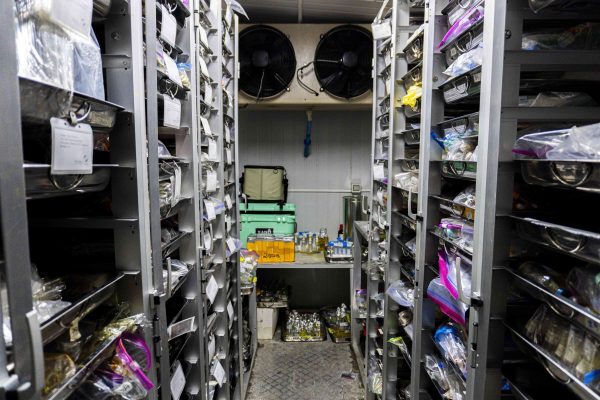
This is where a specialized supplier can shorten the first steps. Swissaustral’s extremophile-derived enzyme portfolio and its Custom Bioprocess Innovation service give researchers a way to evaluate candidates shaped by unusual environments. The portfolio is anchored in Swissaustral’s Extremophile Collection, a proprietary library of more than 300 isolated extremophiles characterized for relevant biological traits. The background on where the Collection comes from is covered in our previous article on where enzymes begin.
An invitation to working at the edge
For researchers at the boundaries of established methods, the next useful catalyst may not be another optimization of a conventional enzyme. It may be an enzyme whose biological origin already reflects the temperature, pH, salinity, or chemical stress of the intended experiment.
Swissaustral’s extremophile-derived enzymes offer a starting point for evaluating unusual catalytic properties in your own system. Browse the enzyme catalogue to explore the extremophile-derived products already available, or get in touch with the Swissaustral technical team to discuss how the untapped potential of The Collection could fit your research programme.
References
Sarmiento, J. E., Peralta, G., & Blamey, K. (2015). Cold and hot extremozymes: Industrial relevance and current trends. Frontiers in Bioengineering and Biotechnology, 3, Article 148. https://doi.org/10.3389/fbioe.2015.00148
Santiago, M., Ramírez-Sarmiento, C. A., Zamora, R. A., & Parra, L. P. (2016). Discovery, molecular mechanisms, and industrial applications of cold-active enzymes. Frontiers in Microbiology, 7, Article 1408. https://doi.org/10.3389/fmicb.2016.01408