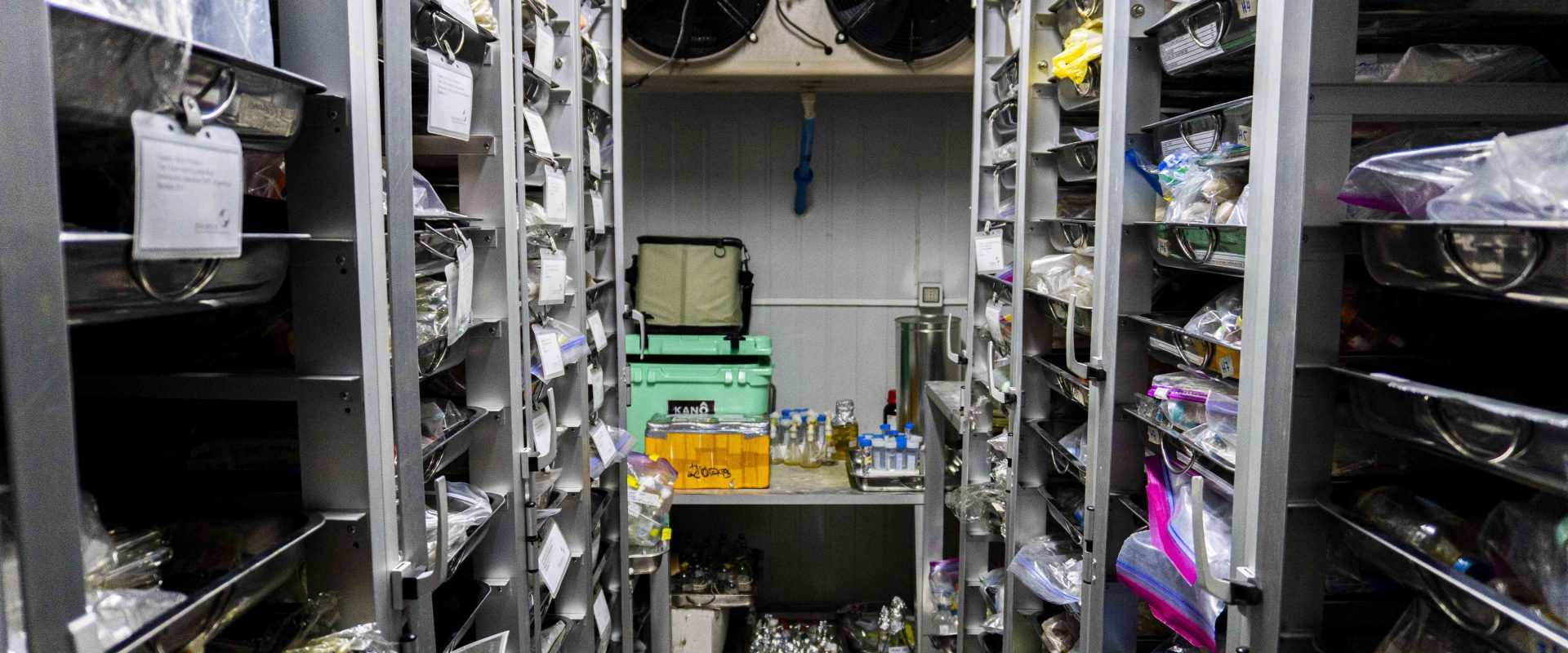
Swissaustral’s Extremophile Collection: Where Enzymes Begin
Swissaustral's Collection of more than 300 extremophilic isolates, sourced from Chilean salt lakes, the Atacama Desert, volcanic and glacial environments, acid lakes, and Antarctic territory, is the biological foundation behind its industrial enzymes.
Why industrial enzymes are usually a compromise
Most commercial enzymes used in industry today trace back to organisms that evolved in moderate environments. A mesophilic fungus, a common soil bacterium, a recombinant E. coli: each is the product of a biology that was never asked to survive a real process. The result is familiar: enzymes that work in a narrow window of temperature and pH, lose activity in the presence of solvents or salts, and have to be stabilised, dosed heavily, or replaced often to keep a line running.
Industrial processes, by contrast, are rarely gentle. They are hot, cold, salty, acidic, alkaline, oxidative, or all of the above at different points in the same shift. The gap between what the enzyme evolved for and what the reactor demands is the gap that industrial buyers quietly pay for, in stabilisers, in over-dosing, in shorter cycles, and in processes where the enzyme of choice simply cannot be used at all.
The alternative: enzymes that evolved for harsh conditions
Extremophiles are microorganisms that grow where most life cannot: in boiling hydrothermal springs, in sub-zero polar ice, in saturated brines, in acid mine drainage. The enzymes they produce, called extremozymes, are folded and stabilised by the same evolutionary pressures that shape the organisms themselves.
A cold-adapted enzyme, isolated from an Antarctic or Patagonian strain, is structurally more flexible and catalytically active at low temperatures. A thermophilic enzyme from a geothermal field tolerates heat that would unfold a mesophilic counterpart in minutes. A halophilic enzyme carries the surface chemistry needed to function in concentrated salt. These are not engineered improvements. They are the baseline biology of organisms that already live there.
The implication for industry is direct: an enzyme that already works at the temperature, pH, or salinity of the process requires less engineering, less stabilisation chemistry, and less process redesign to be useful.
Where The Collection actually comes from
The Collection is built from Chilean extreme environments, and the geography of the country is unusually generous to that goal. Few places on Earth combine so many genuinely extreme biomes within a single national territory.
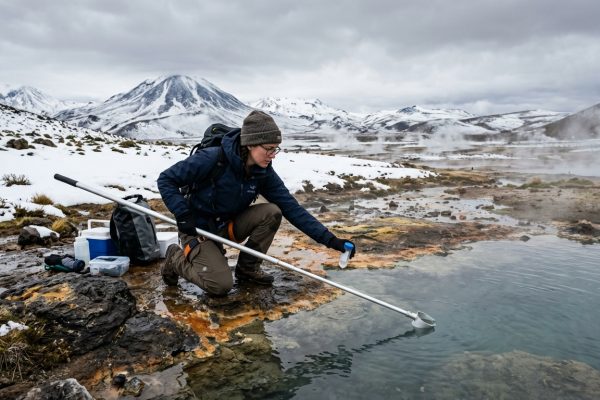
The Atacama Desert, the oldest and driest non-polar desert on the planet, supplies isolates adapted to hyper-aridity, high UV, and mineral-rich soils. The salt lakes of the altiplano and the Salar de Atacama, including acidic systems such as the Gorbea and Ignorado salars, where pH drops well below 4, yield halophiles and acidophiles. Active volcanic and geothermal systems, from El Tatio in the north (the largest geyser field in the Southern Hemisphere) to Porcelana Hot Spring in Chilean Patagonia, deliver thermophiles and metallotolerant organisms. Glacier-fed mountain environments and Patagonian fjords and lakes contribute cold-adapted strains. The Chilean Antarctic Territory, with its geothermal sites juxtaposed against polar cold, produces organisms that bridge temperature extremes that rarely coexist anywhere else.
Each expedition is a deliberate crossing of a different boundary: temperature, salinity, pH, or pressure. Each sample is taken with the assumption that somewhere in the diversity of that environment lies a catalyst that the existing industrial enzyme catalogue does not yet have.
From sample to strain: how a wild isolate becomes part of The Collection
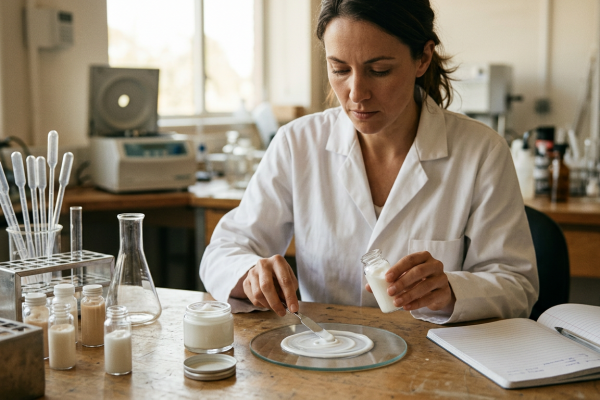
What arrives at the laboratory is rarely a clean strain. It is a soil core, a brine sample, a scraping from a microbial mat, a water column, or a sediment. Turning that into a catalogued entry in The Collection is a stepwise, often slow process.
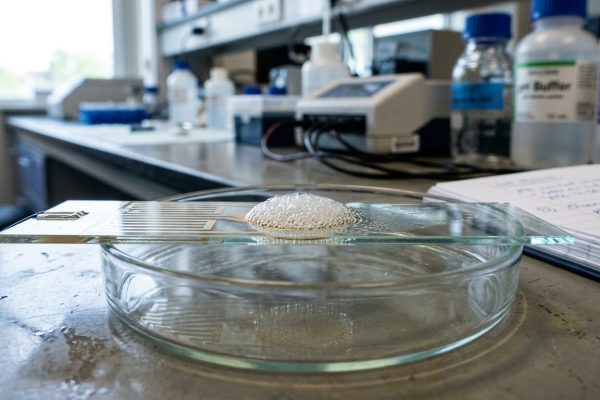
The sample is enriched on selective media designed to favour the kind of organism the site suggested. Isolates are purified, identified by 16S rRNA sequencing, and characterised for the traits that matter downstream: growth temperature and pH ranges, salinity tolerance, and basic enzyme activities. The strains that survive screening are banked in duplicate, preserved as frozen stocks at very low temperatures, and entered into a database that records origin, taxonomy, and characterisation data.
It is a quiet, unglamorous workflow. But it is the workflow that decides what an industrial buyer will eventually be able to buy.
What The Collection actually is, today
The Collection is a proprietary biological library of more than 300 extremophilic isolates, the majority of which are not represented in public strain databases. It spans psychrophiles and psychrotolerants from cold Chilean sites, thermophiles from Andean geothermal fields, thermoalkaliphiles from high-pH environments, halophiles from the altiplano salars, acidophiles from acidic salars and mine-influenced sites, and heavy-metal-tolerant organisms from contaminated environments.
This breadth matters because no single extreme environment produces a complete toolkit. Cold-adapted enzymes solve cold-process problems but rarely help at high temperature. Halophiles help in brine streams but rarely in low-ionic-strength cosmetics. A collection that only samples one type of extreme environment will only solve one class of problem. The Collection is structured precisely to avoid that limitation: a process need can be matched to a biological source because the source is genuinely diverse.
Why this matters to an industrial buyer
The practical consequence is straightforward: the operating envelope of a Swissaustral enzyme is set by the biology of the strain it came from, not by post hoc engineering alone.
Cold-adapted catalase remains active across a broad temperature range that includes ambient conditions, which is why it can be dosed into textile bleach baths, semiconductor cleaning lines, and wastewater streams without heating or cooling the process. Thermophile-derived enzymes tolerate temperatures at which mesophilic enzymes would unfold. Halophile- and acidophile-derived enzymes tolerate salt concentrations and pH values that would inactivate most commercial alternatives. Each of these properties is downstream of a specific isolation decision, made in a specific place, in a specific bioreactor volume, on a specific day.
A buyer evaluating an industrial enzyme rarely asks where the strain came from. They ask whether it works in their process. The answer, more often than not, depends on the fact that the strain came from somewhere genuinely extreme.
From The Collection to a custom enzyme
When a standard catalogue enzyme does not fit a process, The Collection becomes the starting point for a different conversation. Swissaustral’s Custom Bioprocess Innovation service is built around screening The Collection against a specific industrial requirement, identifying candidate strains, optimising production, and delivering a biocatalyst matched to the process, not the other way around.
For teams with a non-standard industrial problem, that route is shorter than it looks. Learn more about Custom Bioprocess Innovation