The Silent Workhorse of Modern Biosensors: Why Hydrogen Peroxide Matters — and How Catalase Makes All the Difference
Why hydrogen shows up in so many biosensors? What challenges does this bring? And how an enzyme called catalase has become one of the most valuable tools in the biosensor designer's toolkit?
Every day, millions of people prick their fingers, place a drop of blood on a small strip, and wait for a number to appear on a screen. Glucose monitoring has become so routine that it barely registers as remarkable. But behind that simple gesture lies a cascade of invisible chemistry — and at the heart of it, a small molecule that few ever think about: hydrogen peroxide (H₂O₂).
Hydrogen Peroxide: The Invisible Intermediary
To understand why hydrogen peroxide matters so much in biosensors, you need to understand what oxidases do.
An oxidase is a class of enzyme that reacts with its target molecule in the presence of oxygen, producing hydrogen peroxide as a byproduct. Glucose oxidase reacts with glucose. Lactate oxidase reacts with lactate. Cholesterol oxidase reacts with cholesterol. In every case, the same pattern repeats: the target molecule is oxidised, and hydrogen peroxide is released.
Because hydrogen peroxide is electrochemically active, it can be measured precisely with electrodes, making it an ideal signal carrier between the biological event and the electronic readout. Most oxidase-based biosensors don’t detect the target molecule directly; they detect the hydrogen peroxide that the oxidase produces from it.
The Peroxide Problem: Useful, But Not Without Complications
The fact that hydrogen peroxide can be detected electrochemically is what makes it so useful. However, this comes with a set of challenges that biosensor designers have been solving for decades.
High working potentials. To oxidize hydrogen peroxide directly at an electrode surface, you typically need to apply a significant electrical potential — often above 0.6 volts. At those potentials, many other electrochemically active substances that are naturally present in biological samples also react, generating false signals. Ascorbic acid (vitamin C), uric acid, and bilirubin are common culprits. This interference reduces the accuracy and reliability of the sensor.
Oxidative stress. Left to accumulate, hydrogen peroxide can damage the enzyme layer, degrade the electrode surface, and shorten the sensor’s operational lifespan — a serious concern for any commercial device expected to perform for weeks or months.
Oxygen dependence. Since oxidase enzymes require oxygen to function, the amount of hydrogen peroxide produced — and the resulting signal — can vary with oxygen concentration in the sample. Managing this variation is a persistent engineering challenge.
These are not insurmountable problems — but solving them well is what separates a reliable biosensor from a fragile prototype.
Catalase: The Body’s Own Peroxide Manager
Nature solved the hydrogen peroxide problem billions of years ago. Inside nearly every living cell, catalase continuously breaks down H₂O₂ into water and oxygen. Without it, hydrogen peroxide would accumulate and damage cellular components.
Biosensor designers took note: co-immobilising catalase alongside the oxidase enzyme delivers several key advantages.
Lower working potential. With catalase managing the peroxide, signal detection can operate at much lower potentials — reducing interference from vitamin C, uric acid, and other substances commonly found in biological samples.
Reduced oxidative stress. By continuously removing H₂O₂, catalase protects the enzyme layer and the electrode surface from oxidative damage, extending the operational lifetime of the sensor without compromising performance.
Oxygen regeneration. The catalase reaction produces oxygen, which the oxidase enzyme can reuse — creating a more stable and self-regulating microenvironment within the sensor.
These advantages explain why catalase has become a standard component in well-designed oxidase-based biosensors. It is not simply a convenient addition — it is a fundamental part of the system that enables consistent, durable, and interference-resistant performance.
A Concrete Example: Cholesterol monitoring
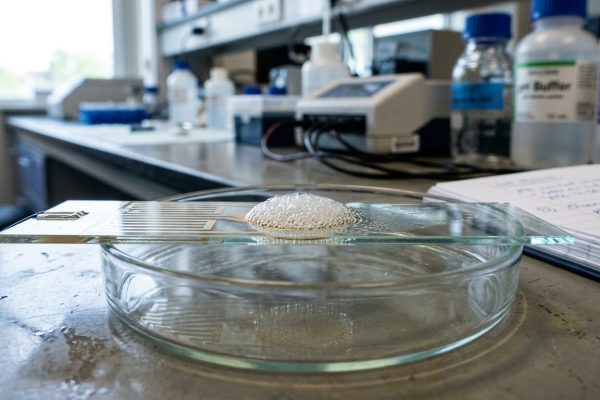
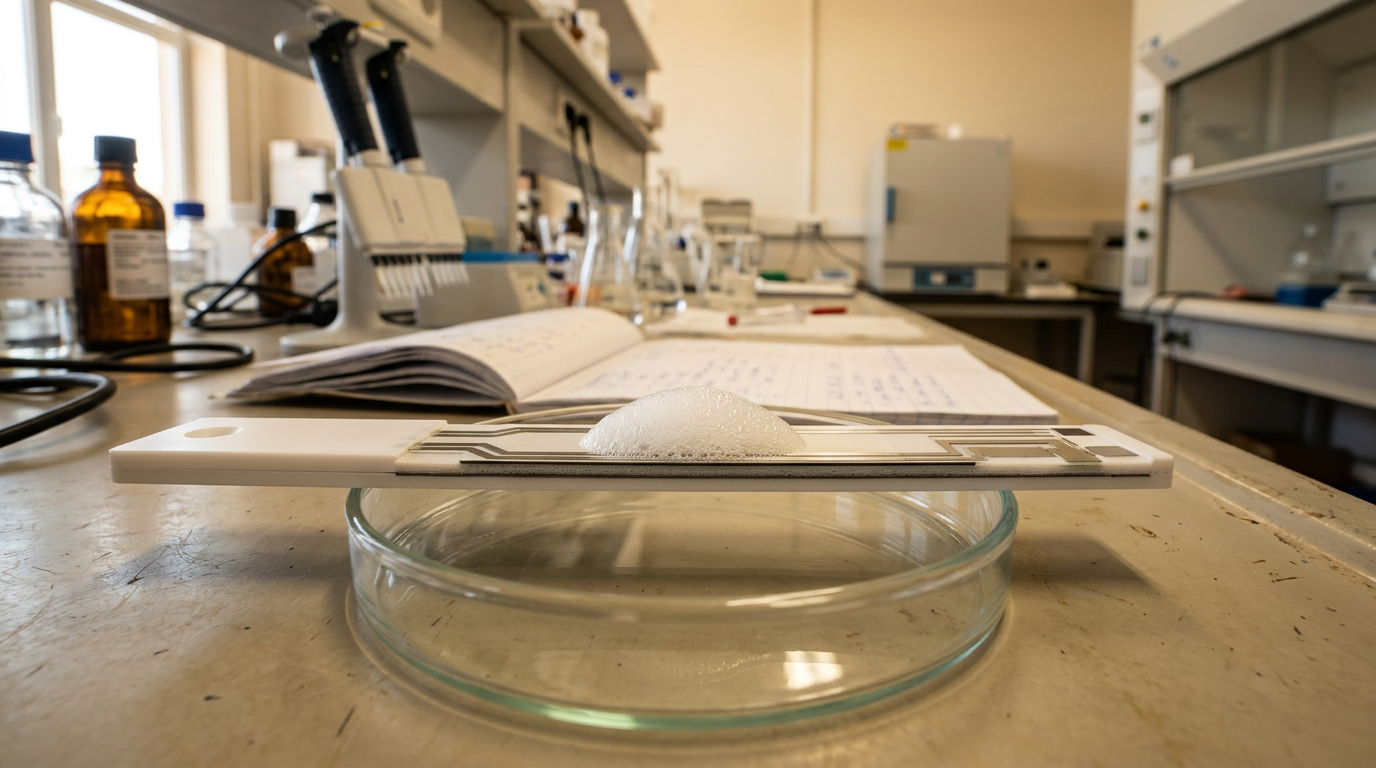
Cholesterol testing is one of the most common measurements in clinical diagnostics, and it is a good example of how catalase supports biosensors that target a molecule other than hydrogen peroxide. In a cholesterol biosensor, an enzyme called cholesterol oxidase reacts with cholesterol in the sample and produces hydrogen peroxide as a by-product. The biosensor then translates that peroxide into an electrical signal at the electrode, and the strength of the signal is read as the amount of cholesterol in the sample.
The challenge is that the peroxide generated by cholesterol oxidase is what introduces noise, interference from substances such as vitamin C, and long-term wear on the sensor. That is why researchers have started pairing cholesterol oxidase with catalase, which breaks the peroxide down into water and oxygen before it can cause problems. A 2014 study by Gholivand and Khodadadian (DOI: 10.1016/j.bios.2013.09.074) showed that co-immobilizing catalase alongside cholesterol oxidase on a graphene-based electrode produced a cholesterol biosensor that was faster, more sensitive, and less affected by interfering compounds when tested on real human serum samples.
This pairing — the oxidase that recognizes the target, plus catalase that cleans up the peroxide the oxidase generates — captures exactly the kind of design in which catalase becomes essential. The oxidase detects what the biosensor is designed to measure. Catalase makes that detection more reliable, more selective, and longer-lasting.
Why the Source of Catalase Matters
Not all catalase enzymes are the same. Like all proteins, their performance depends on their molecular structure — and that structure is shaped by the organism they come from.
Swissaustral produces a catalase enzyme derived from a psychrophilic organism, meaning one that evolved to function optimally in cold environments. This gives the enzyme a set of properties that are particularly well suited to biosensor applications.
Because it evolved at low temperatures, this catalase is active at ambient temperatures — typically from 15 °C to 35 °C — without requiring the elevated temperatures that many enzyme preparations need for peak performance. For point-of-care devices and field-deployable biosensors, where temperature control is limited or impractical, this is a significant advantage. The enzyme also retains its activity across a broad pH range and demonstrates robust long-term stability, making it well suited to the conditions encountered in real-world diagnostic devices.
The choice of enzyme source directly affects how a biosensor performs in the field. A catalase that works reliably at room temperature, maintains stability over months, and protects the sensor’s components is not a luxury — it is a practical requirement for durable, high-quality biosensing.
The Molecule Behind the Measurement
Hydrogen peroxide sits at the intersection of biochemistry and electrochemistry in modern biosensors. It is the intermediate that makes oxidase-based sensing possible — and the challenge that must be managed to make it reliable.
Catalase is nature’s own solution, and today it is a cornerstone of robust biosensor design. Choosing the right catalase — active, stable, and suited to real-world conditions — directly impacts the quality of the final device.
Explore our enzyme solutions at swissaustral.com, or reach out to our team to discuss your specific biosensor requirements.